



Coming from a development background, CPA Architects, a New Jersey-based architecture firm, approaches every project with a pro forma lens. For their team, it’s not just about designing a beautiful building; it’s about making sure a project is financially viable from the start.

Since 2018, CPA Architecture has utilized TestFit as a core component of their feasibility workflow for multi-family projects, resulting in increased project efficiency, enhanced design precision, and improved ROI for their clients.

I’ve loved TestFit since the beginning, as it streamlines our feasibility process and helps our clients make decisions on the deal. We approach all of our projects through a pro forma lens initially, and TestFit helps tell that story.

90% of Projects Run Through TestFit Feasibility
Before TestFit, feasibility meant trace paper, CAD overlays, and manually counted unit blocks, a slow process that often delayed client decisions.
It was almost like a trace paper type process… we’d sketch, put it in CAD, count everything manually, and then total up into a spreadsheet for pro forma. It was very cumbersome.
With TestFit, that workflow has collapsed into real-time modeling and instant pro forma feedback. According to Chris, TestFit is now completely integrated into CPA’s feasibility process, especially for projects over 40–50 units, which make up 90% of their portfolio.
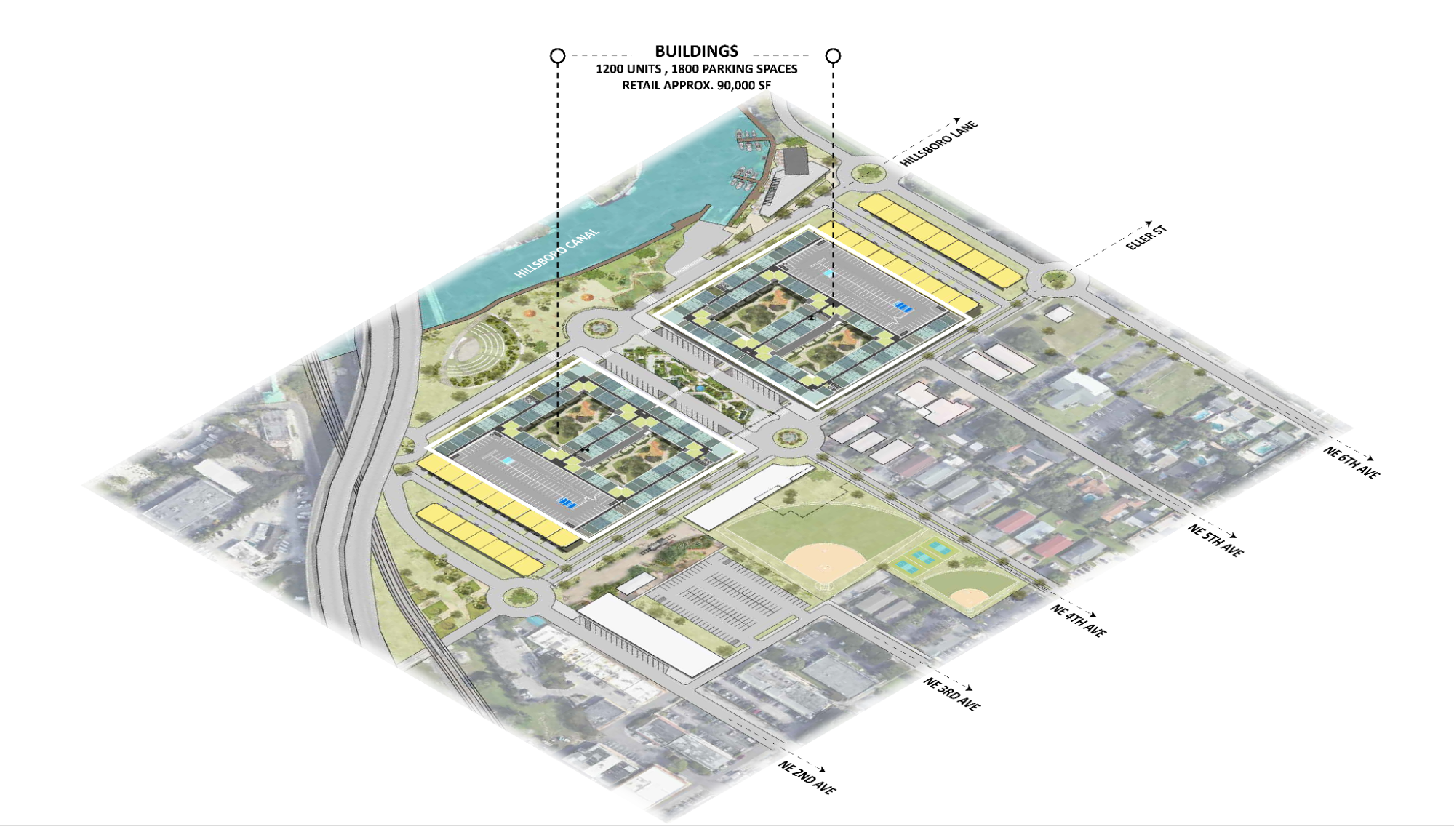
Note: The building above is in Florida, but the statement below does not refer to that project.
In one major New Jersey project, the final constructed building closely mirrored the original TestFit layout, including unit count and massing. CPA Architecture found that larger buildings benefit even more from CPA’s robust unit library, driving alignment between early feasibility and final design.
$200K in Annual Savings on Feasibility Work
CPA estimates TestFit helps their architects deliver 3x more feasibility work with the same resources—a direct result of faster design cycles, higher iteration capacity, and reusable unit libraries tailored to client needs.
Since using TestFit, they’re able to empower their junior designers to contribute at a high level early in their careers. In her first year, designer Erika Romero designed thousands of units using TestFit—while learning the fundamentals of unit efficiency and financial viability.
The savings of using TestFit are tremendous. Our junior designers are designing over 1,000 units with only 1 year of experience in multi-family, while learning the impact of pro forma in their design. That wouldn’t be possible without TestFit.
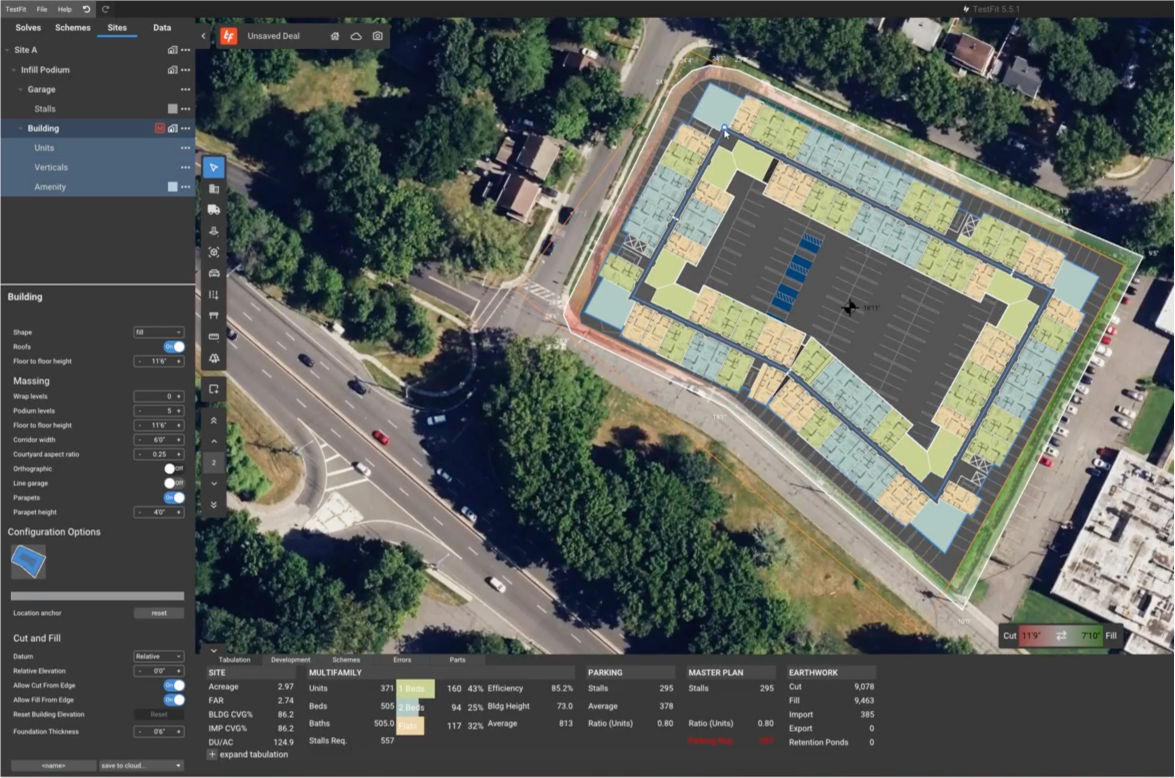
This efficiency results in $150K-$200k in savings a year in operational expenses, while producing faster and higher-quality feasibility studies to win more work with their clients.
But the biggest savings for CPA Architecture?
It’s the savings they bring to their clients, which in turn wins them more repeat work.
It’s not just that we’re saving money on our production. But the input that we get from TestFit and the speed at which we get that input are where the value lies. The real value is in what we can provide to our clients—saving them a lot of money, driving greater relevance and clarity in our approach.
$ Millions in Client Savings Through Pro Forma–Driven Design
TestFit doesn’t just save CPA internal time—it helps their clients avoid costly mistakes. With rapid iteration and real-time data, the team can test dozens of schemes to find what pencils… or prove when it doesn’t.
While some of CPA’s developer clients attempt to use TestFit on their own, the CPA’s team is confident that they can improve the layouts by 50% by utilizing their deep zoning and code knowledge with site planning AI.
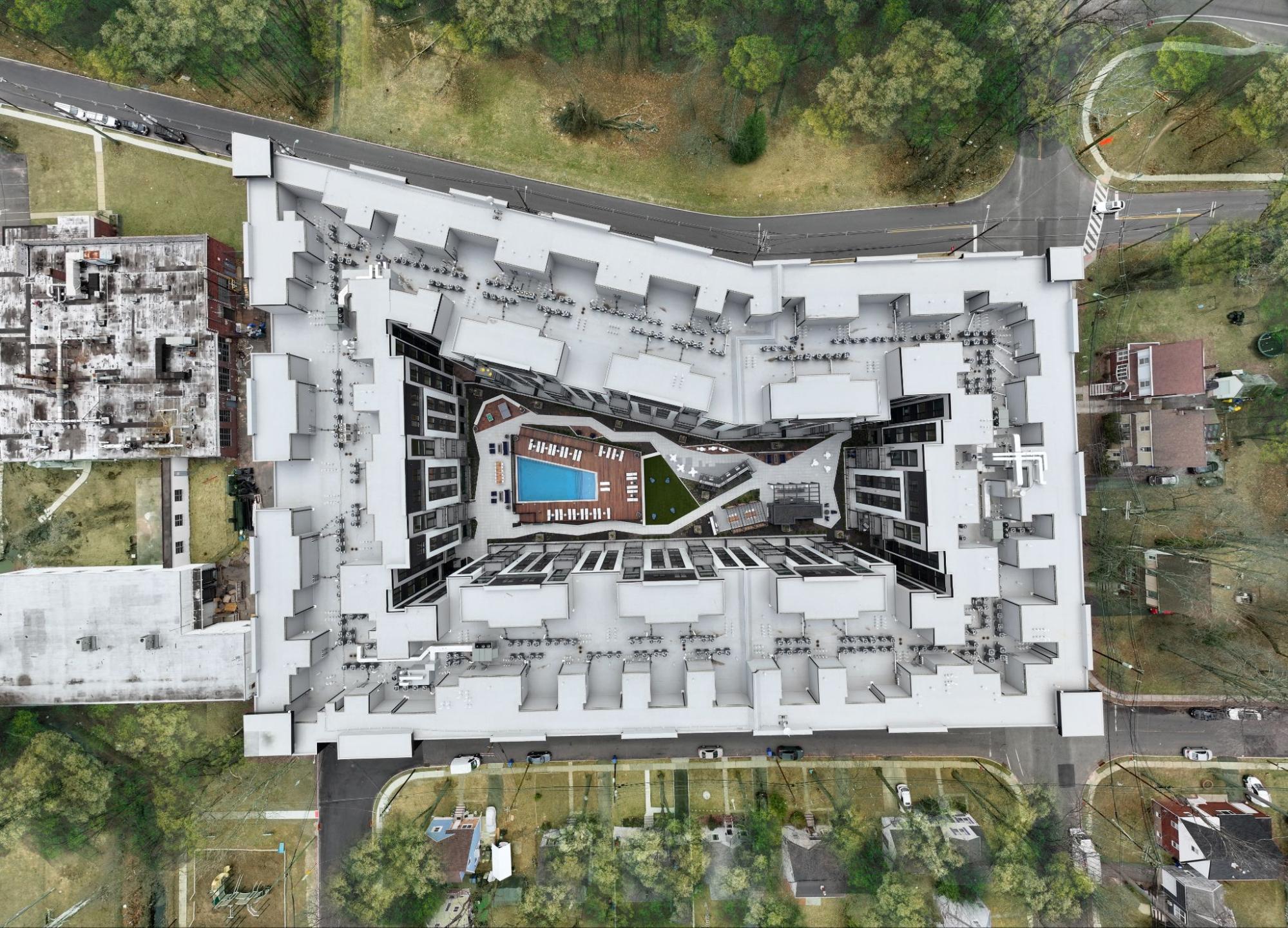
TestFit allows CPA to combine speed with intentionality—factoring in important multi-family parameters like stair cores, elevators, light access, unit depths, and efficiency ratio.
We’re not just utilizing TestFit for two seconds to plop a building on a site. We’re trying to maximize the abilities of the parameters to produce something people actually want to live in.

Unlike most design firms, CPA’s feasibility process also includes financial modeling. With real-time insights into cost, CPA is able to take the financial data and quantity takeoff to run their own pro formas, helping their clients make development decisions faster. Instead of overdesigning, CPA helps developers stay realistic.
We do initial pro formas and tell clients, ‘Hey, this doesn’t make sense.’ We’ve shown them 10 different schemes in TestFit… and nothing pencils out. Sometimes more is not better… You end up spending more money and getting less return. TestFit helps us and our clients make decisions.
“The Value Far Outweighs the Price”
Chris brings a developer’s mindset to architecture—using TestFit to model and communicate financial outcomes from day one. After spending the past two decades blending design creativity with a sharp understanding of development economics, CPA sees the software cost as a non-issue relative to the client value and internal efficiency they gain.
If TestFit cost more, I’d still use it… The value we provide our clients far outweighs the price.


